
Cloud environments accumulate risk continuously. Misconfigurations, orphaned resources, excessive permissions, exposed identities, and configuration drift can appear faster than any team can review them manually. Knowing that a risk exists is useful, but it is not enough. Teams also need to understand impact, exposure, and priority.
That is the gap Cloud Risk Intelligence is built to close.
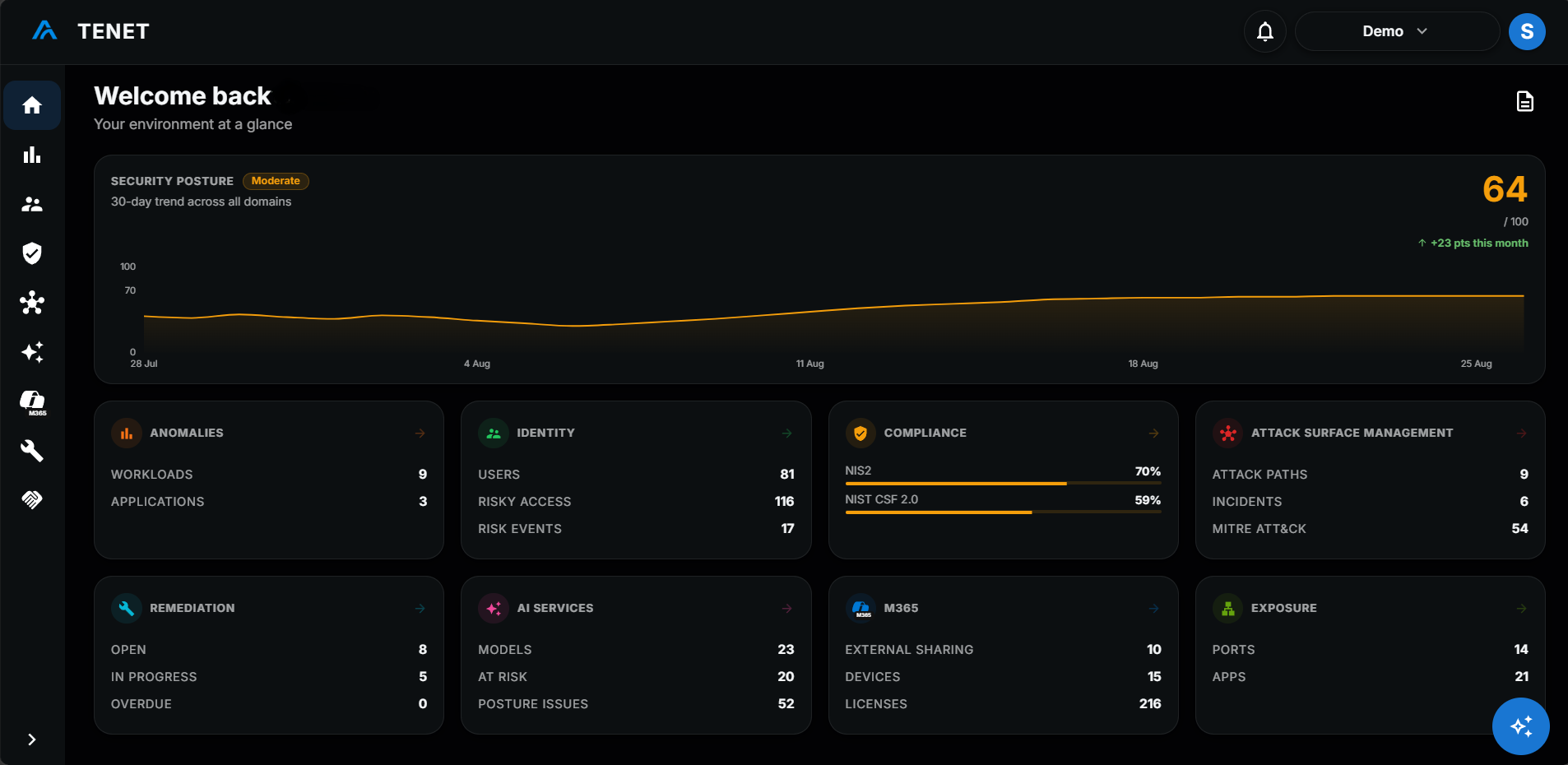
What is Cloud Risk Intelligence?
Cloud Risk Intelligence is the discipline of continuously identifying, analyzing, prioritizing, and managing risk across cloud environments using live telemetry, contextual insight, and AI-assisted analysis.
It is not a single scan or a point-in-time audit. It is an ongoing cycle: telemetry flows in from the environment, data is analyzed for meaning rather than simple presence, risks are ranked by actual impact rather than raw count, and the result is guidance a team can act on instead of another dashboard to review.
Why it matters for Azure and Microsoft 365
Azure and Microsoft 365 environments are dynamic by design. New services get added, permissions accumulate, third-party apps are connected, and configurations drift from their original baseline. Without continuous risk intelligence, teams are left with fragmented visibility: an assessment report here, a security alert there, an access review on its own cadence, and none of it correlated into a single, current picture of exposure.
Real-time telemetry closes the gap between when a risk appears and when it is noticed. Contextual insight makes that risk meaningful: is it isolated, or does it combine with existing exposure to create a more serious security issue? AI-assisted analysis turns those signals into clear decisions, showing teams what to fix first and why it matters.
How TENET applies Cloud Risk Intelligence across Azure and Microsoft 365
TENET is built for Azure and Microsoft 365 as a Cloud Risk Intelligence platform. It connects directly to Microsoft Graph APIs and runs this cycle continuously across existing Microsoft cloud environments.
Telemetry: TENET collects Microsoft cloud telemetry across identities, workloads, configurations, security posture, and more, without agents and with read-only access.
Analysis: Collected data is correlated to identify anomalies, compliance drift, and toxic risk combinations. TENET maps these relationships through the Security Graph so teams see risk in context, not as disconnected log entries.
Prioritization: Risks are ranked by real-world exposure and impact, so teams can focus on what is genuinely urgent instead of spending hours on manual investigation.
Action: Findings are translated into plain-language guidance through BriteAI and connected workflows, helping teams move from detection to remediation without losing context.
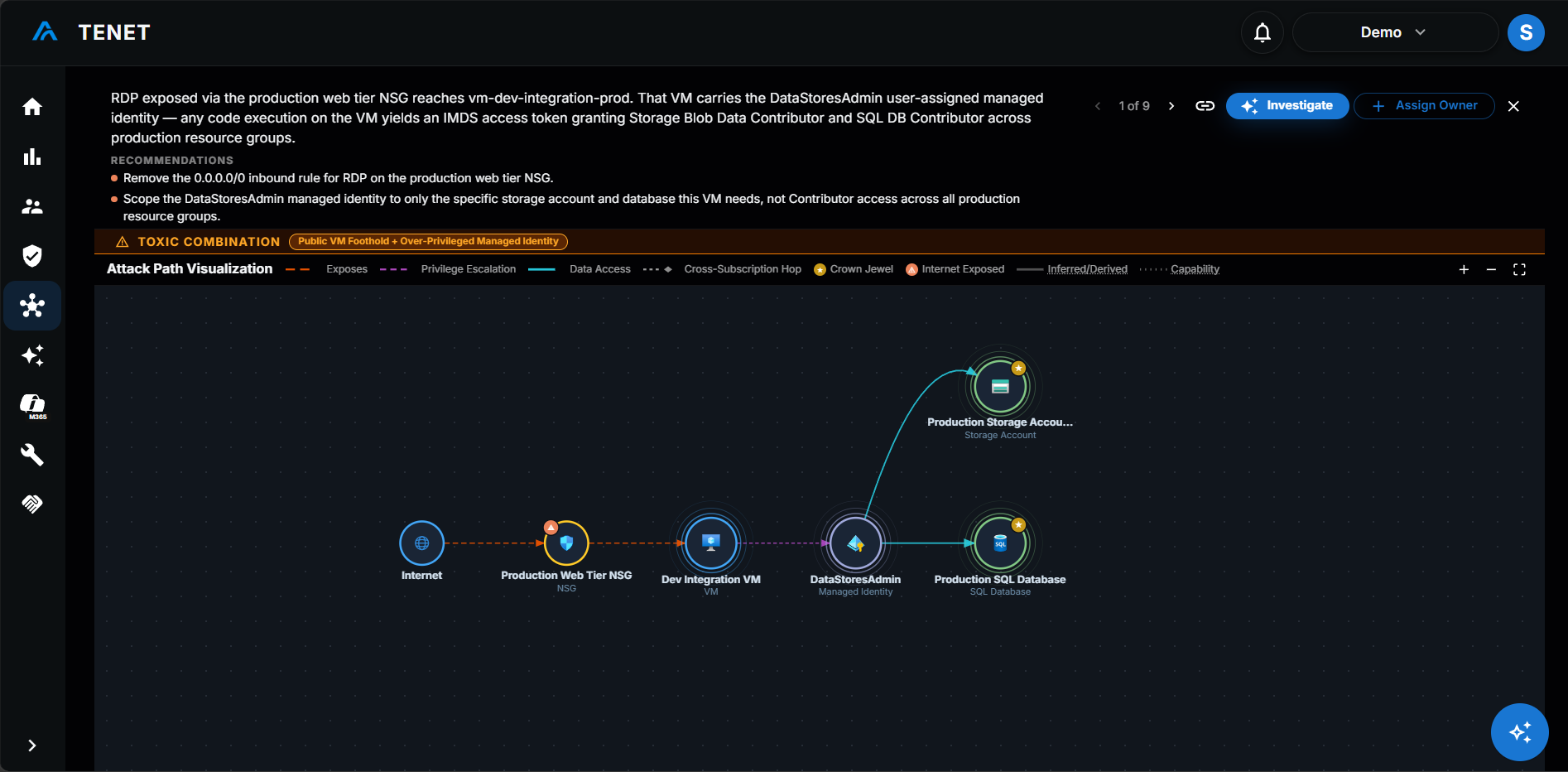
What this looks like in practice
An over-permissioned CI/CD service principal is created during a routine deployment. On its own, that change might look like another identity event. TENET's Security Graph correlates the new permission set with existing exposure paths, flags it as a meaningful risk, and surfaces the context needed to act before it becomes part of an exploitable attack path.
The takeaway
Cloud Risk Intelligence turns scattered signals into a current, contextual, prioritized view of risk. TENET brings that capability natively to Azure and Microsoft 365, helping teams address risks as soon as they arise.
Want to see TENET in action? Start a 14-day free trial or request an assessment.